
Modern cloth dryers have evolved far beyond simple spinning drums. Today’s units feature digital control boards, moisture sensors, heating elements, inverter motors, and advanced airflow systems. While these technologies improve drying efficiency, they also make dryers more complex. When a cloth dryer malfunctions, it can disrupt household routines, create safety hazards, and increase stress — especially in fast-paced homes in Nad Al Hamar.
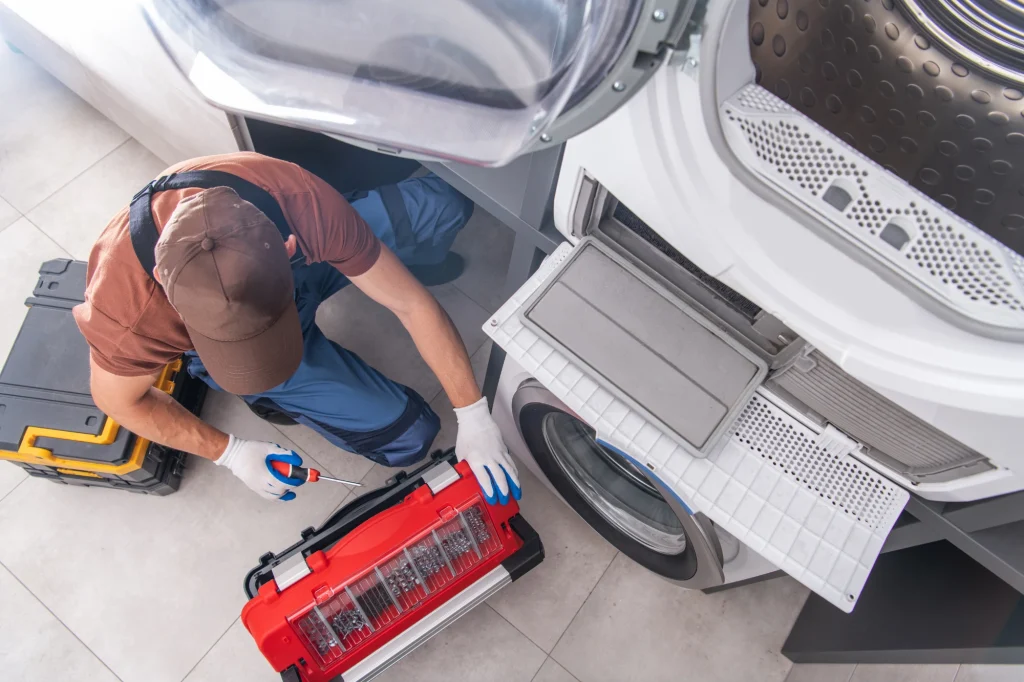
Professional Cloth Dryer Repair services in Nad Al Hamar ensure your appliance continues operating safely and efficiently, protecting clothing quality and avoiding excessive electricity use.
The Hidden Costs of Delaying Cloth Dryer Maintenance
Many homeowners underestimate the risks of minor dryer issues. Strange noises, longer drying cycles, or uneven drying may seem trivial initially. However, these small signs often indicate underlying problems that can worsen over time if ignored.
Modern dryers rely on interconnected mechanical and electrical components. When one part fails, it places extra strain on the motor, heating system, or control board. What starts as a minor inconvenience can escalate into:
- Complete appliance breakdown
- Overheated motors
- Burnt heating elements
- Electrical faults
- Higher energy bills
Prompt professional servicing helps prevent costly emergency repairs and extends the lifespan of your dryer.
Everyday Frustrations Caused by Cloth Dryer Pain Points – Nad Al Hamar
Cloth dryers are a cornerstone of modern household convenience. They save time, reduce manual labor, and keep clothes ready for daily use. In Nad Al Hamar, where families often rely on reliable drying routines, even minor appliance issues can quickly disrupt schedules, cause stress, and increase household expenses. Understanding the common dryer problems and their real-life impacts can help homeowners act promptly and prevent escalation.
1. Dryer Won’t Start
A dryer that refuses to turn on is one of the most stressful problems for homeowners. Pressing the start button and seeing no response — no lights, no sound, no spinning drum — can throw daily routines into disarray.
The Real Struggle:
- Laundry piles up, creating clutter and inconveniences in limited living spaces.
- Homeowners must resort to hand-drying, which is time-consuming and inefficient.
- Anxiety grows over potential repair costs, especially if electrical components are involved.
- Doubts arise about whether the dryer is worth repairing or if replacement is more cost-effective.
Tip: Before calling a technician, check the power outlet, circuit breaker, and door switch. Sometimes, minor electrical issues or misaligned doors can cause the appliance not to start.
2. Error Codes and Digital Alerts
Modern dryers come with smart control boards that display error codes like dE, HE, tE, or FE. While these codes are designed to prevent damage, they often confuse homeowners who are unfamiliar with the digital system.
The Real Struggle:
- Homeowners feel overwhelmed trying to interpret codes without guidance.
- Fear arises that the appliance may be irreparably broken.
- Stress increases as people attempt DIY fixes that may worsen the problem.
- Ignoring the error can escalate a small sensor or heating issue into a major, costly repair.
Tip: Always consult a certified dryer repair technician for accurate diagnosis and timely repair. Early action prevents prolonged downtime and additional damage.
3. Clothes Not Drying Properly
Even if the dryer runs, issues like uneven drying or persistent dampness are common frustrations.
The Real Struggle:
- Multiple drying cycles increase electricity consumption and household bills.
- Time is wasted re-drying clothing, disrupting daily routines.
- Garments may shrink, wrinkle, or develop odors if exposed to prolonged heat or dampness.
- Homeowners question the reliability and effectiveness of the appliance.
Common Causes: Clogged vents, faulty heating elements, or defective moisture sensors often result in improper drying.
Tip: Regular maintenance, such as cleaning vents and checking sensors, can prevent these issues.
4. Dryer Overheating
Overheating is a serious problem that combines safety risks with practical inconvenience.
The Real Struggle:
- Risk of fire or damage to delicate clothing increases.
- Automatic shutdowns interrupt laundry schedules, delaying chores.
- Anxiety grows when leaving the dryer unattended due to safety concerns.
- Expensive repairs may be required if heating elements or thermal fuses are damaged.
Tip: Professional inspection ensures safe operation, recalibrates heating components, and prevents future overheating incidents.
5. Strange Noises During Operation
Dryers should operate quietly, so rattling, grinding, or buzzing noises are immediate red flags.
The Real Struggle:
- Persistent noise disrupts quiet living spaces, particularly in apartments or open-plan homes.
- Anxiety arises over potential drum or motor failure.
- Planning laundry routines becomes difficult if cycles are unpredictable.
- Certain noises indicate worn-out components that may need imminent replacement.
Tip: Do not ignore unusual sounds. Early professional inspection can prevent further damage and costly downtime.
6. Moisture Sensor Malfunction
Modern dryers rely on moisture sensors to determine when clothes are dry. Sensor failures lead to over-drying or incomplete drying.
The Real Struggle:
- Clothes may shrink due to excessive heat exposure.
- Damp garments despite a full drying cycle cause frustration and extra workload.
- Energy usage rises due to repeated cycles.
- Household members waste valuable time re-running laundry.
Tip: Certified technicians can recalibrate or replace faulty sensors to restore proper cycle function.
7. Lint Filter or Vent Blockages
Lint accumulation and vent obstructions reduce airflow, compromise efficiency, and create hazards.
The Real Struggle:
- Drying times are extended, wasting electricity.
- Fire risk increases if lint buildup is ignored.
- Unpleasant odors develop in laundry areas.
- Homeowners spend additional time manually cleaning or monitoring cycles.
Tip: Clean the lint filter after each load and schedule professional vent inspections annually. Proper airflow prevents overheating and extends dryer lifespan.
8. Emotional and Financial Impact
Beyond technical issues, dryer problems create emotional and financial stress.
Pain Points:
- Anxiety from disrupted laundry routines, particularly during busy weeks or family events.
- Concern over repair costs and potential appliance replacement.
- Increased workload for household members managing laundry manually.
- Fear of unexpected breakdowns that interrupt essential daily activities.
Tip: Professional Cloth Dryer Repair Nad Al Hamar services alleviate stress, restore appliance performance, and ensure household safety. Early intervention not only protects clothing but also preserves peace of mind.
Why Early Attention Matters
Addressing minor issues promptly prevents the domino effect of larger failures. Certified Cloth Dryer Repair services in Nad Al Hamar provide:
- Accurate diagnosis of mechanical and electrical faults
- Safe repair using genuine spare parts
- Restoration of drying efficiency and safety
- Prevention of recurring issues
Waiting too long often results in higher repair costs, damaged clothing, or total appliance replacement.
Common Dryer Error Codes and Their Meanings – Nad Al Hamar Guide
Modern cloth dryers are no longer simple spinning machines. Today’s units feature digital control boards, moisture sensors, heating elements, inverter motors, and airflow systems, making them more efficient but also more complex. To ensure safe operation and prevent major damage, manufacturers have incorporated error code diagnostic systems. These codes allow the dryer to communicate faults before they escalate, helping homeowners take prompt action.
Understanding these error codes is crucial for residents of Nad Al Hamar, where daily laundry routines depend heavily on reliable drying appliances. Ignoring warning signals can lead to overheating, motor burnout, fire hazards, or complete appliance failure.
Below, we explore the most common dryer error codes, what they mean, their causes, symptoms, and recommended actions.
dE – Door Error
Meaning:
The “dE” error indicates a door malfunction. The dryer cannot detect that the door is fully closed, preventing it from starting. This is a critical safety feature — dryers will not operate if the door is improperly latched to avoid accidental injury.
Possible Causes:
- Door not fully closed or blocked by clothing
- Faulty door latch or spring mechanism
- Worn-out door sensor or switch
- Loose internal wiring affecting the sensor
Symptoms:
- Dryer does not start even when power is on
- Lights may blink or control panel shows an active error
- Intermittent cycles if the sensor connection is unstable
Recommended Action:
- Ensure no clothes or obstructions are preventing door closure
- Inspect the latch for visible damage or wear
- If the problem persists, call a professional technician to replace the door sensor or latch mechanism
Homeowner Tip:
Do not force the door closed or attempt to bypass the sensor. This compromises safety and may void the warranty.
tE – Thermistor Error
Meaning:
The “tE” code signals a problem with the thermistor, the component responsible for monitoring the dryer’s internal temperature. Accurate temperature readings are essential for efficient drying and preventing overheating.
Possible Causes:
- Faulty thermistor or temperature sensor
- Damaged or disconnected wiring
- Control board malfunction
Symptoms:
- Clothes remain damp after the full cycle
- Dryer may stop mid-cycle or display inconsistent cycle times
- Overheating risk due to unregulated temperature
Recommended Action:
- Professional diagnosis is required to test the thermistor’s resistance and functionality
- Replace the sensor if readings are inaccurate
- Inspect wiring and control board connections for damage
Homeowner Tip:
Attempting to bypass a thermistor or continue using the dryer with a “tE” code can cause permanent damage to the heating element or drum motor.
HE – Heating Error
Meaning:
The “HE” code indicates a heating failure. The dryer’s heating element or the related control circuitry is malfunctioning, preventing clothes from drying effectively.
Possible Causes:
- Burnt or damaged heating element
- Electrical relay or fuse failure
- Faulty control board
- Wiring issues within the dryer
Symptoms:
- Clothes remain wet or damp after a full drying cycle
- No heat or uneven heat distribution
- Longer than usual cycle durations
Recommended Action:
- Professional inspection of the heating element, wiring, and control board
- Replace any defective components with certified spare parts
- Test the dryer after repair to confirm safe and efficient operation
Homeowner Tip:
Never attempt to test or replace a heating element yourself unless trained. These components operate at high voltage and pose fire and electrocution risks.
FE – Filter Error
Meaning:
The “FE” code appears when the lint filter is clogged or airflow is restricted. Proper airflow is essential for drying efficiency and preventing overheating.
Possible Causes:
- Lint accumulation in the filter
- Blocked vent hose or exhaust duct
- Sensor detecting poor airflow
Symptoms:
- Dryer cycles take longer than usual
- Clothes may come out damp or hot to the touch
- Error code remains active despite the dryer running
Recommended Action:
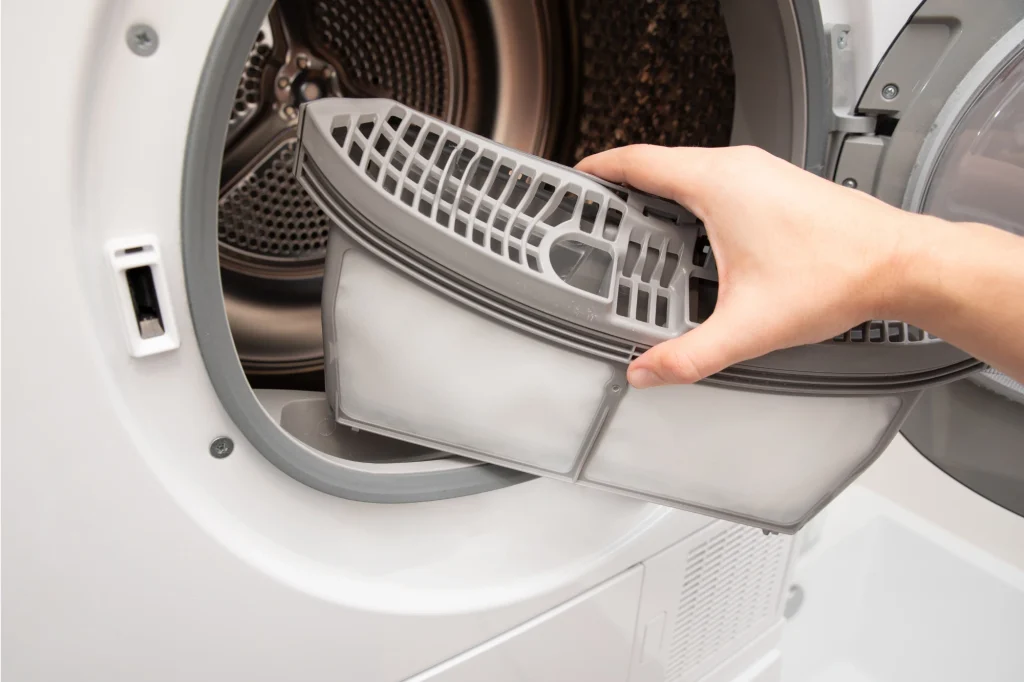
- Remove and clean the lint filter thoroughly
- Inspect the vent hose and exhaust duct for blockages
- Ensure the vent is free of debris outside the home
Homeowner Tip:
Regular lint cleaning is the simplest preventive maintenance step. Doing so not only prevents FE errors but also reduces fire risks and improves drying efficiency.
CE – Control Board Error
Meaning:
The “CE” code signals an electronic fault within the dryer’s control board, which manages all major operations including heating, motor rotation, sensors, and safety systems.
Possible Causes:
- Faulty or damaged control board
- Moisture intrusion or wiring short-circuit
- Power surges or voltage fluctuations
Symptoms:
- Blank or flickering display
- Randomly stopping or resetting cycles
- Error codes appearing intermittently
- Inability to select proper drying programs
Recommended Action:
- Professional diagnosis using specialized tools
- Control board replacement if necessary
- Inspect wiring and connectors for signs of corrosion or damage
Homeowner Tip:
Never attempt to repair the control board yourself. Handling sensitive electronics improperly can damage the dryer permanently and create safety hazards.
Why Early Intervention Matters
Error codes are not arbitrary; they are early warnings designed to protect your appliance and your home. Ignoring them can result in:
- Burnt motors or heating elements
- Fire hazards due to overheating or clogged vents
- Complete appliance failure
- Higher repair costs if minor issues escalate
- Increased electricity consumption due to inefficient operation
Preventive Measures to Avoid Error Codes
Homeowners in Nad Al Hamar can reduce the likelihood of error codes by following these maintenance practices:
- Clean the lint filter after every cycle – prevents FE errors and overheating
- Inspect and clear vent ducts regularly – ensures proper airflow
- Avoid overloading the dryer – reduces strain on motors and sensors
- Check for loose or damaged wiring – prevents CE and tE errors
- Schedule annual professional servicing – keeps heating elements, sensors, and control boards in optimal condition
How Long Does Cloth Dryer Repair Take in Nad Al Hamar?
- Minor issues: 1–2 hours (lint cleaning, sensor calibration)
- Moderate repairs: 2–4 hours (heating element or vent replacement)
- Major repairs: Longer, depending on motor or control board replacement
Professional technicians aim to resolve most problems in a single visit to minimize household disruption.
Safety Considerations
Cloth dryers involve:
- High-voltage electrical circuits
- Rotating motors
- Heating elements that can reach high temperatures
Only certified technicians should perform repairs to ensure safety and prevent appliance damage.
Frequently Asked Questions
1. How long does a dryer typically last?
With proper maintenance, most modern dryers last 10–12 years. Regular servicing and addressing minor issues early help extend their lifespan.
2. Can I continue using the dryer if an error code appears?
No. Operating the dryer with an error code can worsen damage or create safety hazards. Stop use and call a professional immediately.
3. Should I repair or replace my dryer?
Repair is usually recommended if costs are below 50% of a new unit. For older dryers with recurring issues, replacement may be more practical.
4. Can I perform maintenance myself?
Yes, basic tasks like cleaning lint filters and checking vents are safe. Electrical or heating element repairs should only be done by certified technicians.
5. Do repair services provide a warranty?
Most professional services offer warranties on both parts and labor, typically ranging from 30 days to 12 months. This ensures reliability and peace of mind.
Restore Efficient Drying with Certified Spare Parts
A malfunctioning dryer disrupts daily routines, wastes time, and increases costs. Whether it’s heating failure, sensor malfunctions, loud noises, or error codes, professional Cloth Dryer Repair Nad Al Hamar services deliver reliable, long-lasting solutions.
Timely repair prevents expensive replacements, protects your investment, and ensures your dryer continues to operate safely and efficiently. Don’t wait — schedule professional service today to restore comfort, convenience, and peace of mind to your home.